
Have you ever walked confidently into a room, only to completely forget what you came for the moment you crossed the threshold? Or in a conversation, despite your desperate attempts to focus, found your thoughts drifting away like a wild horse?
For most people, these are just occasional "short circuits." But for people with ADHD (Attention-Deficit/Hyperactivity Disorder), this is the "factory setting" that plays out every day.
If you've ever stared blankly at a computer screen, or regretted speaking impulsively, and started wondering "What is wrong with me?"—this article is for you.
We will not only dive deep into what does ADHD stand for, but also detail how to get diagnosed with ADHD, revealing the real-life experiences behind this medical label.
 Illustration of a person standing at a door looking confused, with keys and phone floating around
For many ADHDers, the daily struggle is not about "lack of effort," but a different way of regulating attention and executive function.
Illustration of a person standing at a door looking confused, with keys and phone floating around
For many ADHDers, the daily struggle is not about "lack of effort," but a different way of regulating attention and executive function.
The Bottom Line Up Front: What Does ADHD Actually Stand For?
ADHD stands for Attention-Deficit/Hyperactivity Disorder. It is a neurodevelopmental disorder: the core difficulties usually lie in attention regulation, impulse control, and executive function (planning, organizing, initiating, time sense), not because "you are not disciplined enough."
1. What Does ADHD Stand For: Breaking Down the Four Letters
Many friends often ask, what does ADHD stand for? Its full name is Attention-Deficit/Hyperactivity Disorder.
This name might sound a bit scary, or even carry a hint of "defect." But if we look past the cold medical terminology, we find that it actually describes the unique way the brain operates in two core functions: Attention-Deficit and Hyperactivity/Impulsivity.
More accurately, this is not a "moral issue" or a "willpower issue," but a difference in neurodevelopment. You can think of it as the brain's "filter" and "brake system" being different from others: attention regulation difficulties mean the brain has a harder time filtering out irrelevant noise and distractions, letting information flood in like a tide; while hyperactivity and impulsivity are like worn-out brake pads, where thoughts and actions rush out before conscious control kicks in.
This is why many ADHDers often describe themselves as having a "Ferrari engine" but unfortunately equipped with "bicycle brakes."
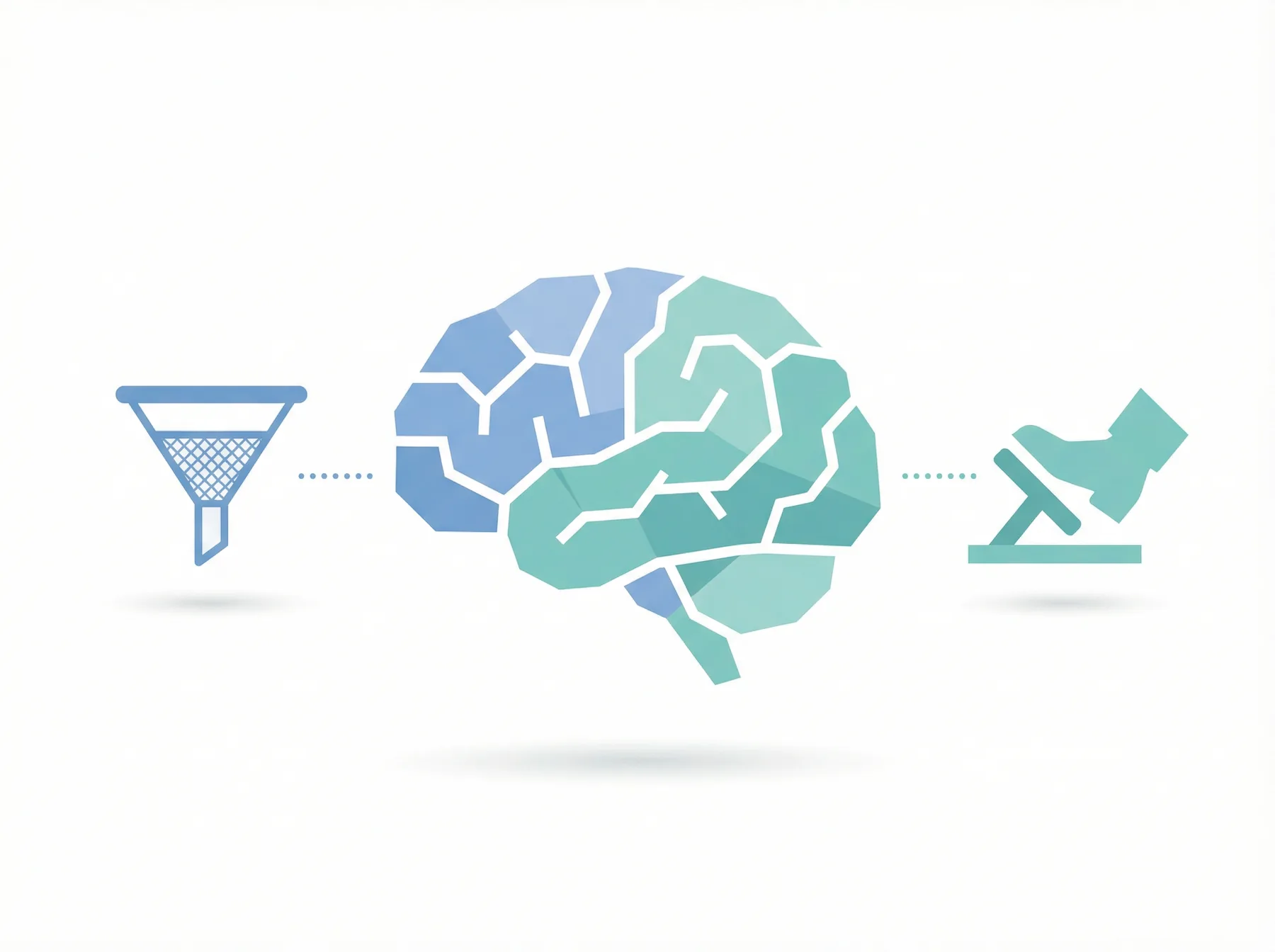 Conceptual illustration of a brain with "filter" and "brake" metaphors
The core of ADHD is often not about "whether you have the ability," but "whether you can consistently access that ability."
Conceptual illustration of a brain with "filter" and "brake" metaphors
The core of ADHD is often not about "whether you have the ability," but "whether you can consistently access that ability."
Three Common Presentations of ADHD (You Might Not Fit the Stereotype)
Clinically, ADHD is often described in three main presentations (wording varies slightly across systems, but the gist is similar):
- Predominantly Inattentive Presentation: Easier to zone out, forget, procrastinate, and struggle with organization; may appear "very quiet" on the outside, and thus easier to be overlooked.
- Predominantly Hyperactive-Impulsive Presentation: Restlessness, interrupting others, and acting before thinking are more obvious.
- Combined Presentation: Both types of features are prominent.
This also explains why many adults (especially those who were told to be "good and quiet" growing up) don't realize they might have ADHD until later in life: the symptoms aren't necessarily "running around," but more commonly internal exhaustion, procrastination, time blindness, and emotional dysregulation.
2. Real-Life "Translation": What Does It Look Like?
Medical definitions are for doctors; life experiences are what's real. If you want to know if you might have ADHD traits, see if the following scenarios feel familiar.
The Flickering Spotlight (Attention-Deficit)
The so-called "attention deficit" is actually a huge misunderstanding. It's not that you have no attention at all; rather, your attention is often unregulated.
Faced with boring meetings, long reports, or complex administrative forms, your brain feels like it's undergoing physical torture, with every minute feeling like a century. However, once you encounter a game, topic, or challenge that interests you, this attention flips magically—you enter a state of "hyperfocus," neglecting sleep and food for hours, and no one can pull you away.
This instability of attention is also reflected in the details of life. Phones, keys, and wallets seem to always be playing hide-and-seek with you; you might swear in the morning to finish a task, only to find in the evening that you haven't even started; you think only 5 minutes have passed, but it's actually been 2 hours. This distorted perception of time often leads to meltdowns at the last minute before deadlines.
The Unstoppable Motor (Hyperactivity and Impulsivity)
When mentioning hyperactivity, many people picture a little boy running around in a classroom. But for adults, hyperactivity is often internalized.
You might look like you're sitting steadily in an office chair, but inside, it feels like thousands of ants are crawling, and your thoughts are churning. To relieve this internal restlessness, your body unconsciously seeks outlets: shaking your leg, spinning a pen, biting your nails, or constantly changing sitting positions during meetings. This feeling of "restlessness" is like having a motor inside that never turns off.
Impulsivity is another significant feature. You might not be able to help interrupting when others are speaking because if that thought isn't spoken, it feels like it will explode; you might be extremely impatient when queuing; or when emotional, impulsively buy a bunch of useless things, or even rashly decide to quit a job or end a relationship.
3. How to Get Diagnosed with ADHD: Process and Standards
If you find the above description reads like your ID card, you might ask: how to get diagnosed with ADHD?
How to get diagnosed with ADHD is a rigorous clinical process that typically refers to diagnostic frameworks like the DSM-5. This isn't something that can be determined by a simple online test; it requires a comprehensive assessment by a psychiatrist or a qualified clinical psychologist.
Core Diagnostic Logic
According to DSM-5 standards, doctors usually focus on the following key points:
First is the number of symptoms. For children under 17, at least 6 symptoms are required in either the "inattention" or "hyperactivity/impulsivity" domain; for adolescents and adults aged 17 and older, this threshold is lowered to 5 items. This reflects a consensus in the medical community: as age increases, the outward symptoms of ADHD may become more subtle.
Second is the persistence and history of symptoms. These symptoms must have persisted for at least 6 months, and there must be evidence that several symptoms were present before age 12. This means ADHD is a neurodevelopmental condition that starts in childhood, not something that suddenly appears in adulthood.
Finally is cross-situational impairment. These symptoms cannot appear only at home or only at school; they must cause significant interference in two or more settings (such as home, school, work, or social situations). If your "forgetfulness" only happens when you don't want to do housework, that might not be ADHD.
Why Does This Happen? (It's Not Because You're "Lazy")
Understanding the pathology is very important during the diagnostic process. Research confirms that ADHD involves a dysregulation of dopamine and norepinephrine in the brain. These two neurotransmitters are responsible for the brain's "executive function"—the "CEO" responsible for planning, organizing, controlling impulses, and allocating attention.
For ADHDers, this brain CEO is often on vacation. So, when you can't finish a task, it's not because you don't want to, nor because you are lazy or stupid, but because your brain lacks the "chemical fuel" needed to initiate the task.
Step-by-Step: What Typically Happens in an Assessment
Procedures vary slightly by region and doctor, but a standard assessment usually includes these modules (manage your expectations):
- Detailed Interview: What are your specific difficulties in study/work/social/family life? When did they start? What impacts you the most?
- Childhood and Developmental History: Since ADHD is considered to start in childhood, doctors will ask for clues before age 12 (e.g., classroom behavior, homework, teacher comments, family conflicts).
- Scales and Questionnaires: Used to structurally assess the frequency and severity of inattention and hyperactivity/impulsivity (scales themselves are not "diagnosis machines," but provide reference).
- Cross-Situational Information: Often, you'll be asked to bring a partner/family member to provide observations, or fill out third-party questionnaires, to see if problems exist across multiple scenarios.
- Exclusion and Differential Diagnosis: Sleep problems, anxiety/depression, bipolar disorder, trauma responses, substance use, thyroid issues, etc., can all cause similar attention difficulties; doctors need to judge where the "ADHD-like presentation" is coming from.
- Comorbidity Assessment: ADHD often co-occurs with anxiety, depression, learning disabilities, ASD, etc.; clarifying comorbidities makes the treatment plan more stable.
Pre-Visit Preparation Checklist (Get Useful Answers Faster)
- Write down 10 specific examples: Like "forgot to pay bills," "can't listen in meetings," "staying up late to rush deadlines," "impulsive shopping," etc. The more specific, the better.
- Record the timeline: When did these problems become obvious? What was your state in elementary school, middle school, high school, college, and your first job?
- Prepare materials (if available): Report cards/teacher comments/parent descriptions, past psychological or psychiatric records, medication history.
- List 3 goals troubling you right now: For example, "sleep on time consistently," "break down work and deliver on time," "reduce emotional explosions"—this helps the doctor provide an actionable treatment plan.
The Bottom Line: What to Do Next?
ADHD is not a curse; it's just a different way of neuro-functioning. Now that you know what does ADHD stand for and understand the basic path of how to get diagnosed with ADHD, you don't have to blame yourself for "why can't I be like others."
Act Now:
- Self-Awareness: Based on the descriptions above, record 3 specific scenarios in your life that trouble you the most. This will be very helpful for future medical visits.
- Seek Professional Help: If you suspect you meet the criteria, please go to the psychiatry or psychology department of a legitimate hospital for an assessment. Professional diagnosis is the first step to getting help.
- Acceptance and Adjustment: Stop fighting your brain and start learning the "user manual" that suits you. Whether it's medication or behavioral therapy, there are mature solutions to help you regain control of your life.
Remember: Understanding the meaning of ADHD is the first step to mastering it.
 Illustration of a path "from confusion to action": doctor assessment, tools, and support systems
Diagnosis is not for labeling, but for obtaining support and strategies that suit you better.
Illustration of a path "from confusion to action": doctor assessment, tools, and support systems
Diagnosis is not for labeling, but for obtaining support and strategies that suit you better.
Important Note (Please Read Carefully)
This article is for popular science and self-education purposes only and does not constitute medical advice, nor can it replace professional diagnosis. If you are experiencing severe emotional distress, substance abuse, or have thoughts of self-harm/suicide, please prioritize seeking help from local emergency medical or psychological crisis resources.
FAQ: Common Questions About "What Does ADHD Stand For" and Diagnosis
Q1: What is the full name of ADHD? A: ADHD = Attention-Deficit/Hyperactivity Disorder.
Q2: Can adults still be diagnosed with ADHD? A: Yes. Many people were overlooked or treated as "careless/procrastinating/lazy" when they were young, and only realized the problem persisted when stress increased in the workplace, relationships, and life management in adulthood.
Q3: Are online self-tests useful? A: They can serve as a clue for "whether to seek medical assessment," but cannot be used as a basis for diagnosis. A real diagnosis requires comprehensive interviews, medical history, cross-situational impact, and differential diagnosis.
Q4: If diagnosed, how is it usually treated? A: Common plans include medication, Cognitive Behavioral Therapy (CBT), behavioral and environmental modifications, ADHD coaching/skills training, etc. The most effective is often a combination of "medication + behavioral strategies" (specific plans need to be formulated by professionals).