"Why can't I just focus?" "Am I just too lazy?" "Why do tasks that seem easy for others feel like climbing Mount Everest for me?"
If these late-night self-interrogations sound familiar, you are not alone. A few years ago, I was trapped in this cycle of self-doubt. Despite working hard, I was always forgetful; despite wanting to do things well, I wouldn't start until seconds before the deadline. I thought I was "broken" until I started learning about ADHD (Attention-Deficit/Hyperactivity Disorder).
Many adults silently endure this struggle, harboring not only the question "Do I have ADHD?" but also a practical concern: "If I have ADHD, does this mean I have a disability? Will this affect my work and life?"
This is not just about a medical label; it's about your legal rights and quality of life. In this article, we will peel back the complex medical terminology and legal statutes to help you see the truth step-by-step and find practical solutions.
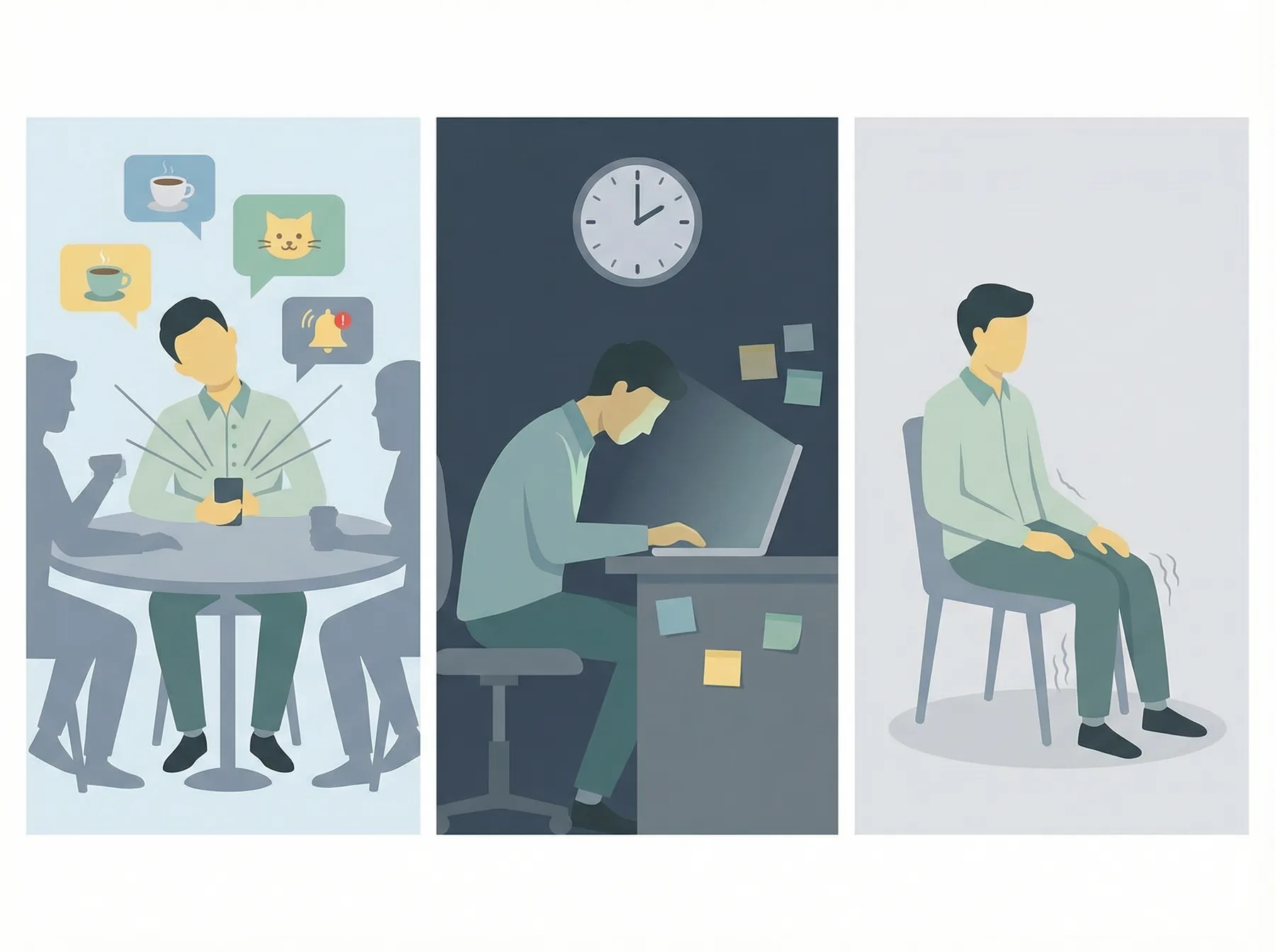
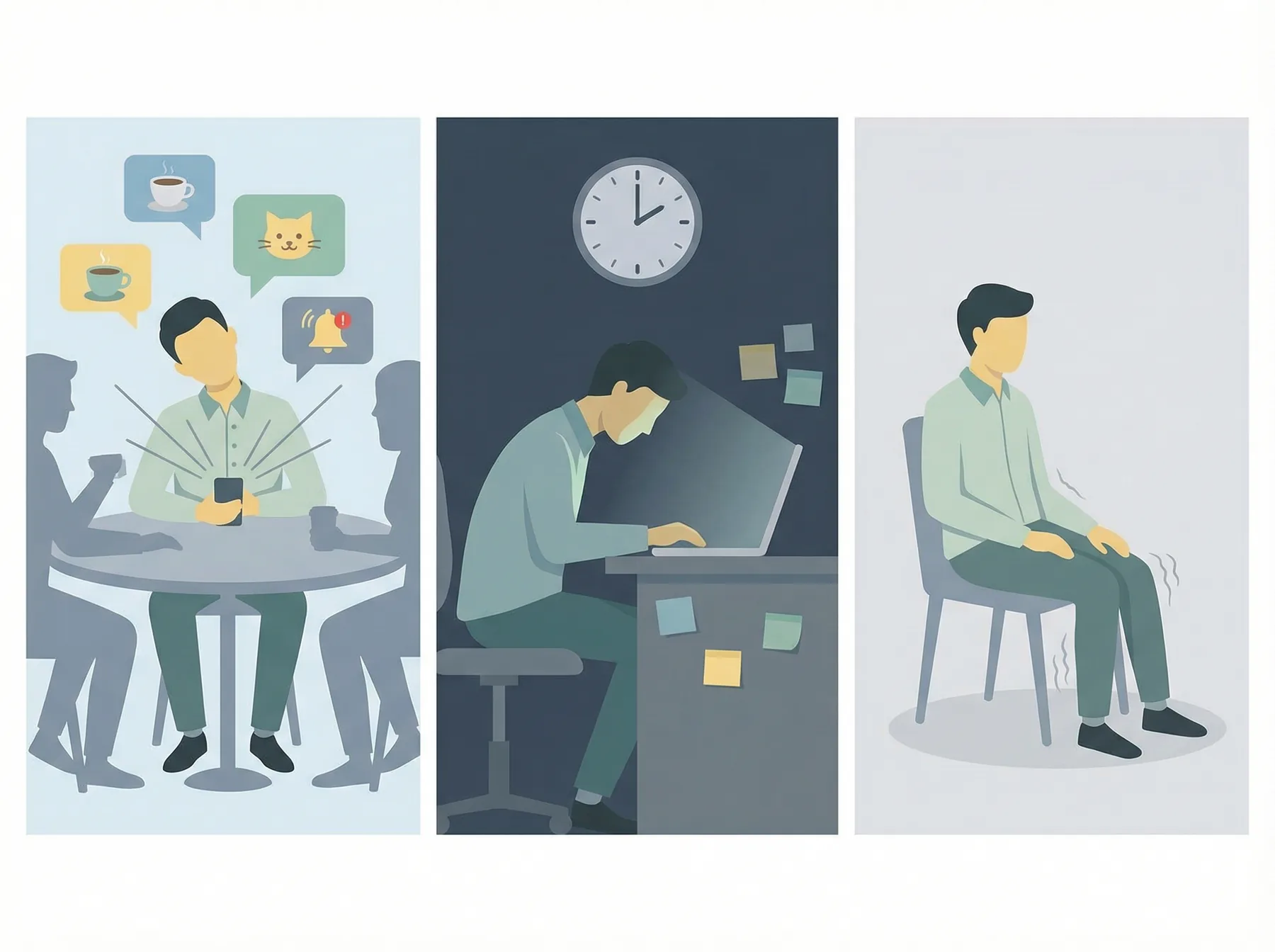 Three scenes of adult ADHD: distraction, hyperfocus, and restlessness
ADHD in adults often looks like inconsistent attention regulation: distracted in low-stimulus settings, intensely focused in high-interest ones, and internally restless even when “sitting still.”
Three scenes of adult ADHD: distraction, hyperfocus, and restlessness
ADHD in adults often looks like inconsistent attention regulation: distracted in low-stimulus settings, intensely focused in high-interest ones, and internally restless even when “sitting still.”
1. How Does It Manifest? (More Than Just "Can't Sit Still")
Many people's stereotype of ADHD is still stuck on the "naughty little boy." But in fact, the manifestation of ADHD is far more complex, especially in adults.
Core symptoms generally fall into two categories:
- Inattention: This is not just distraction. It is "difficulty regulating" attention. You might zone out during boring meetings (mind wandering) but be hyper-focused when playing a favorite game. You might frequently lose keys, forget appointments, or appear "absent-minded" when others are speaking to you.
- Hyperactivity/Impulsivity: Adult hyperactivity often isn't "running around the room" anymore; instead, it transforms into inner restlessness, leg shaking, interrupting others, or impulsive spending and reckless driving.
A New Concept: Cognitive Disengagement Syndrome (CDS) Recent research (such as the ICD-11 standards) has even begun to focus on a manifestation called "Cognitive Disengagement Syndrome" (CDS). If you frequently feel "brain fog," slow reaction times, or excessive daydreaming, this might be a specific form of attention issue, not just introversion.
Tip: Don't just look at surface behaviors; look at whether these behaviors have been long-term (present since childhood) and affect your functioning across multiple settings (home, work, school).
2. The Diagnosis Journey: No Magic Wand
If you suspect you have ADHD, don't expect a blood test or an online questionnaire to confirm it. Professional diagnosis is a rigorous, multi-step process.
- Clinical Interview is Key: Doctors will spend time understanding your developmental history. Because ADHD is a neurodevelopmental disorder, symptoms must have been present before age 12 (even if they weren't detected at the time).
- Multiple Sources of Evidence: Doctors won't just listen to what you say; they may need to see your childhood report cards, comments, or even interview your parents or partner. This is to confirm the "persistence" and "cross-situational nature" of symptoms.
- Process of Elimination: Anxiety, depression, sleep apnea, or even thyroid issues can cause lack of focus. A professional assessment will help rule out these "confounding factors."
Actionable Advice: Start collecting your childhood "evidence." Look for old report cards and recall if teachers used to say you were "smart but careless" or "fidgety." These are crucial for adult diagnosis.
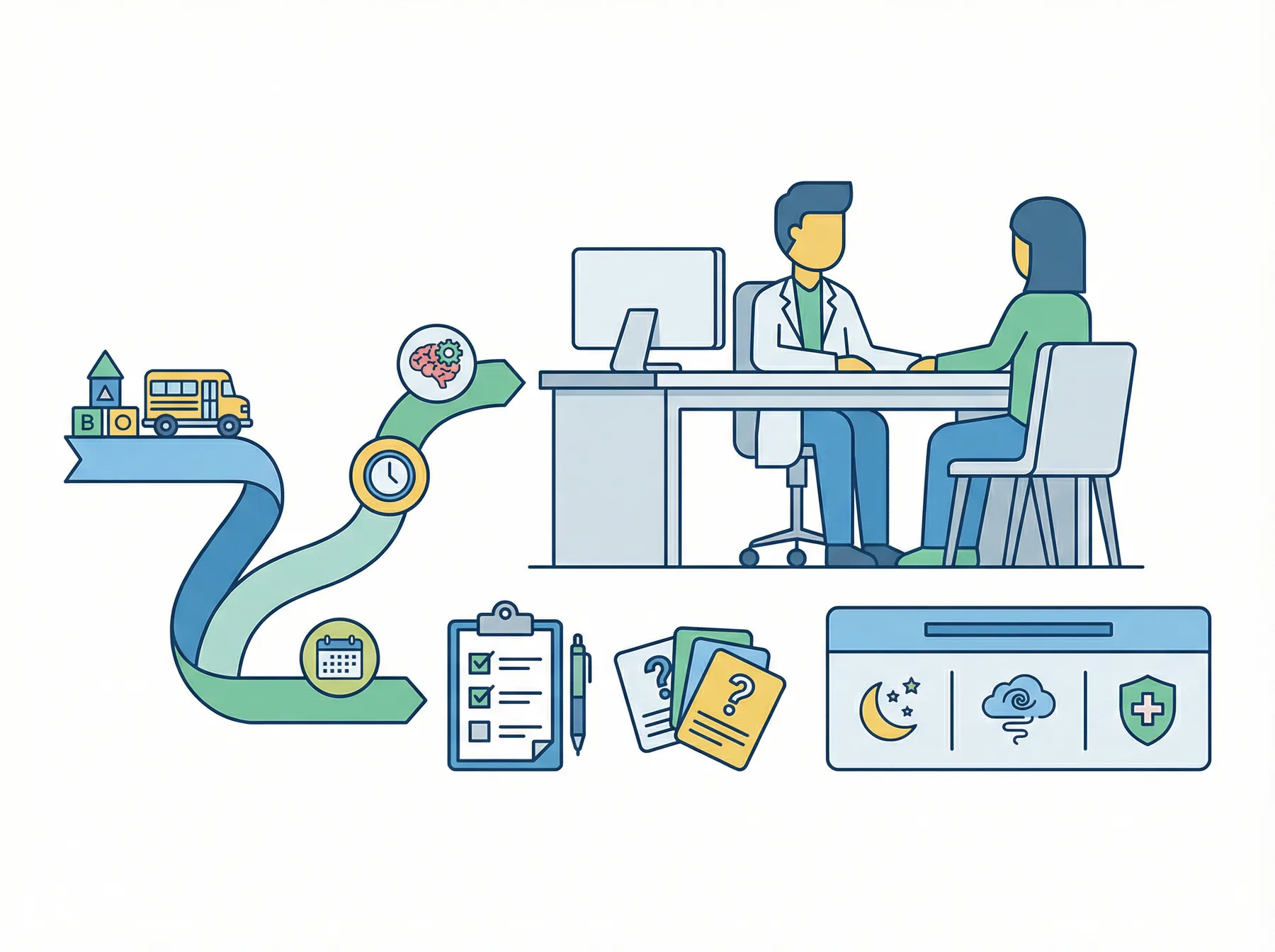 Infographic of the adult ADHD diagnosis journey: history, checklists, and ruling out look-alikes
A solid evaluation is usually a structured process: developmental history, symptom evidence across settings, and ruling out conditions that can mimic ADHD (sleep issues, anxiety/depression, medical factors).
Infographic of the adult ADHD diagnosis journey: history, checklists, and ruling out look-alikes
A solid evaluation is usually a structured process: developmental history, symptom evidence across settings, and ruling out conditions that can mimic ADHD (sleep issues, anxiety/depression, medical factors).
3. Legal Status: Is ADHD a Disability?
Short Answer: Yes, it can be.
In the United States (under the ADA and Section 504) and many other countries' legal frameworks, if ADHD "substantially limits one or more major life activities," it is considered a disability.
What Does This Mean? "Major life activities" include learning, reading, thinking, concentrating, communicating, and even working. If your ADHD makes these aspects significantly more difficult for you than for the average person, you are protected by law.
This doesn't mean you are "incompetent"; it acknowledges that your brain functions differently and that you face specific barriers in existing environments (designed for neurotypical people). This legal status is not to label you, but to provide protection.
4. Workplace & School: Accommodations You Deserve
Since ADHD can be considered a disability, you have the right to request "Reasonable Accommodations." This isn't "special treatment"; it's about creating a level playing field.
Practical Accommodations You Can Try to Request:
- Environmental Adjustments: Request noise-canceling headphones, move to a desk with fewer distractions, or use office partitions.
- Time Management: Flexible working hours, more frequent short breaks (Pomodoro Technique), written task instructions (to avoid verbal forgetting).
- Assistive Tools: Permission to record meetings, use task management software, or even ask for help with meeting minutes.
Note: When requesting accommodations, you need to enter an "interactive process." You don't have to start by shouting "I have a condition," but you need to clearly explain your difficulties (e.g., "Noise prevents me from focusing") and the specific help you need.
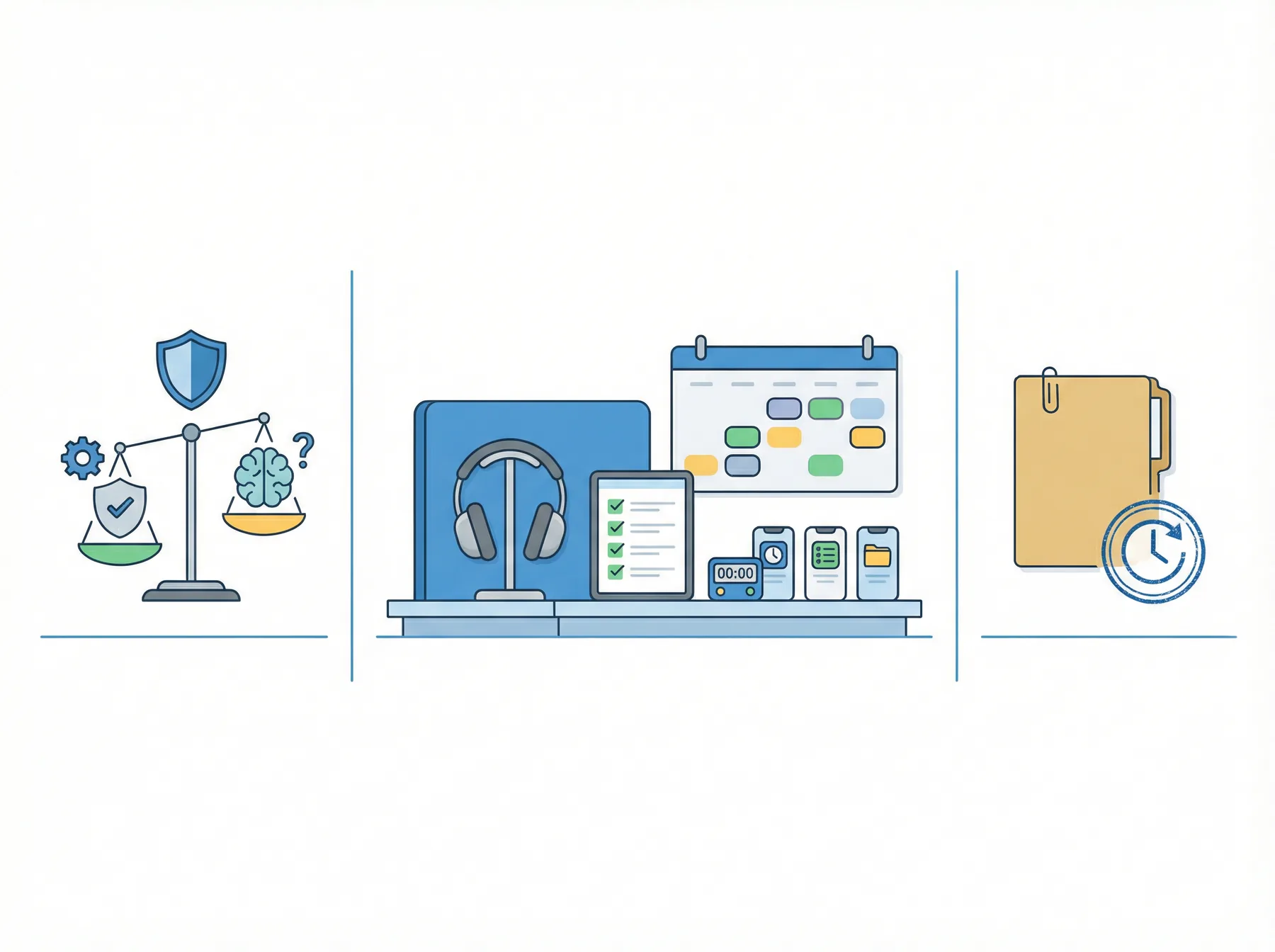 Legal protection and workplace accommodations for ADHD: shield, balance scale, and practical tools
Disability status is about access: legal protection + practical accommodations (reduced distractions, written instructions, flexible timing, assistive tools) and, for some contexts, updated documentation of current impact.
Legal protection and workplace accommodations for ADHD: shield, balance scale, and practical tools
Disability status is about access: legal protection + practical accommodations (reduced distractions, written instructions, flexible timing, assistive tools) and, for some contexts, updated documentation of current impact.
5. Adult Challenges: Proving "The Current You" Still Needs Help
For adults, especially those wanting to request accommodations for professional exams (like the Bar Exam, CPA) or returning to school, there is a huge "Documentation Barrier."
Institutions often require "current" diagnostic reports (usually within the past 3-5 years). Even if you were diagnosed 20 years ago, they want to know if "the current you" is still impaired.
- More Than Just a Diagnosis: You may need to provide evidence of functional impairment, such as work performance reviews, records of failed exams, or detailed neuropsychological test reports.
- The Nexus: The doctor's report must clearly state: How do your ADHD symptoms directly cause your inability to complete tasks under standard conditions (e.g., slow processing speed leads to inability to finish within the time limit).
The Bottom Line
Don't let shame stop you from seeking help.
ADHD is not a character flaw, nor is it an intelligence issue. It is a complex neurobiological condition that has both medical explanations and legal protections.
- Self-Observation: Notice your patterns of attention, impulsivity, and "brain fog."
- Seek Professional Diagnosis: Bring your childhood "evidence" and find a specialist who understands adult ADHD.
- Exercise Your Rights: If you face barriers at work or school, reasonable and legal accommodations are support tools you deserve.
If you have been struggling in the dark, today might be the first step to turning on the light. Go book that assessment, understand your brain, and take back control of your life.